The ISO 13485 family of requirements focuses on quality management systems for medical devices. It helps organisations establish processes to consistently meet customer and applicable regulatory requirements throughout the medical device life cycle, from design and development to production, storage, distribution, and servicing.
What is ISO 13485?
ISO 13485:2016 is an international standard specifying requirements for a Quality Management System (QMS) used by organisations involved in medical devices and related services. It focuses on product quality, risk management, process control, traceability, and applicable regulatory requirements.
What is a Medical Device Quality Management System?
A medical device quality management system is a structured framework for managing processes that affect the safety, quality, and regulatory conformity of medical devices. It defines responsibilities, controls documented information, and establishes procedures for monitoring and improving relevant processes.
ISO 13485 places particular emphasis on risk-based controls, validation of applicable processes, product traceability, supplier controls, complaint handling, and corrective actions throughout the medical device life cycle.
Key Areas of Medical Device Quality Management
These areas help organisations maintain consistent processes and support the quality and regulatory conformity of medical devices.
Product Safety
Regulatory Compliance
Risk Management
Process Validation
Product Traceability
Document Control
Continual Improvement
Who is ISO 13485 for?
ISO 13485 is intended for organisations involved in one or more stages of the medical device life cycle. These may include medical device manufacturers, component suppliers, contract manufacturers, distributors, importers, sterilisation providers, and organisations providing installation or servicing activities, depending on the applicable requirements and certification scope.

How will it benefit my business?
- Improve consistency in medical device manufacturing and service processes.
- Support applicable medical device regulatory requirements.
- Strengthen risk management and product safety controls.
- Improve product identification, traceability, and documentation.
- Establish controls for suppliers and outsourced processes.
- Improve complaint handling and corrective action processes.
- Build confidence among customers and relevant stakeholders.
ISO 13485: Benefits
An effective medical device quality management system helps organisations control processes that affect product quality, safety, and regulatory conformity. It supports documented procedures, production controls, supplier evaluation, equipment management, traceability, and the handling of nonconforming products.
ISO 13485 certification can demonstrate that an organisation's quality management system has been assessed against the applicable standard. Certification alone does not establish that every medical device is approved for sale in every market or that all regulatory obligations have been fulfilled.
Should I be certified to ISO 13485?
Certification may benefit organisations that manufacture or supply medical devices and related products or services. It can support customer confidence, supplier qualification, and applicable regulatory or contractual requirements. The specific requirements depend on the organisation's role, products, and target markets.
How do I get started with ISO 13485:2016?
Key implementation tips
- Define the QMS scope and identify the medical devices and activities covered.
- Determine applicable regulatory and customer requirements.
- Identify process risks and establish appropriate risk management controls.
- Implement document control, traceability, supplier evaluation, and production controls.
- Validate applicable processes and maintain required records.
- Conduct internal audits, management reviews, and corrective actions.
Need further guidance? Contact our team to discuss your medical device quality management implementation and certification requirements.
Related Medical Device Standards
Related standards and guidance include:
- ISO 14971 — Risk management for medical devices.
- ISO 13485 — Medical device quality management systems.
- ISO 15223-1 — Symbols used with medical device labels.
- ISO 20417 — Information to be supplied by the manufacturer.
- ISO 11607 series — Packaging for terminally sterilized medical devices.
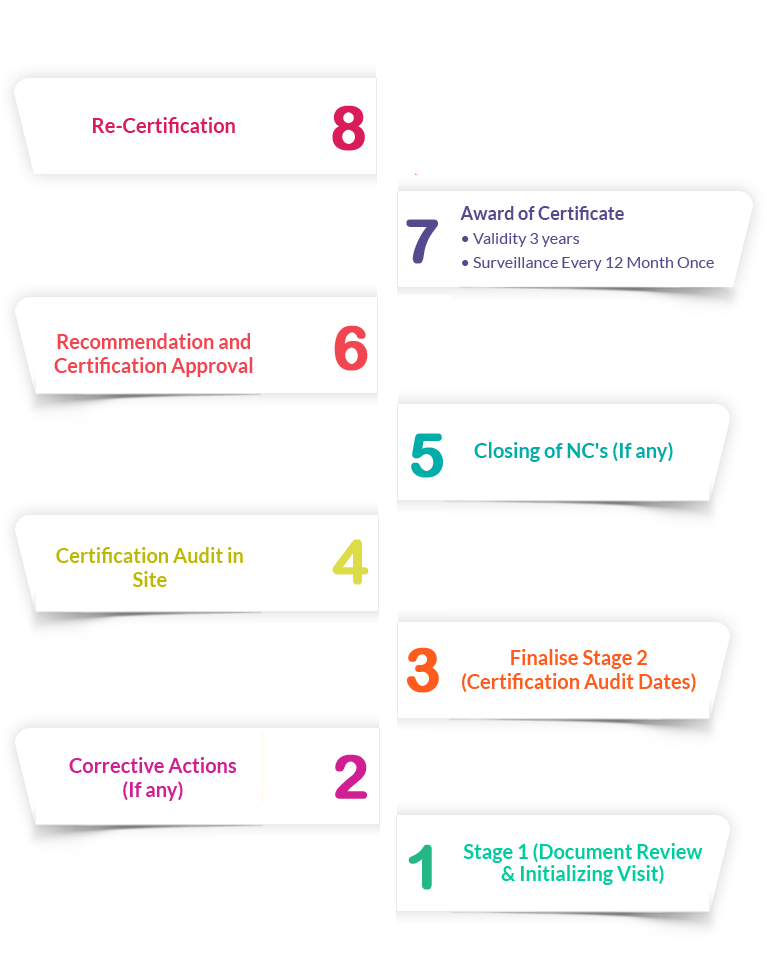
Certification Process
-
01
Preliminary Audit (Optional)
An initial review can identify gaps in quality management procedures, regulatory documentation, risk controls, and relevant medical device processes.
-
02
Certification Audit
Stage 1 and Stage 2 audits assess the QMS scope, documented processes, risk management, traceability, production controls, and implementation against applicable requirements.
-
03
Certification Decision
Following satisfactory audit outcomes and the required certification decision, a certificate may be issued for the approved scope.
-
04
Surveillance Audits
Periodic surveillance audits evaluate whether the quality management system continues to meet applicable requirements and remains effectively implemented.
-
05
Recertification
Recertification is completed before expiry in accordance with the applicable certification scheme and audit requirements.