The ISO 22000 family of standards focuses on food safety management throughout the food chain. It provides a framework to help organisations identify food safety hazards, implement effective controls, communicate food safety information, and ensure that food products are safe for their intended use.
What is ISO 22000?
ISO 22000:2018 specifies requirements for a Food Safety Management System (FSMS). It helps organisations involved directly or indirectly in the food chain identify, prevent, and control food safety hazards while demonstrating their ability to provide safe products and services.
What is a Food Safety Management System?
A Food Safety Management System is a structured framework for managing food safety hazards, establishing preventive controls, maintaining relevant records, and ensuring effective communication among organisations throughout the food chain.
ISO 22000 integrates the principles of Hazard Analysis and Critical Control Points (HACCP), prerequisite programmes, system management, and risk-based thinking to support food safety and continual improvement.
Key Principles of Food Safety Management
These principles help organisations maintain food safety controls, protect consumers, and strengthen food safety practices throughout their operations.
Food Safety Protection
Hazard Analysis
Preventive Controls
Food Chain Communication
Process Monitoring
Traceability and Records
Continual Improvement
Who is ISO 22000 for?
ISO 22000 is suitable for organisations of all sizes involved directly or indirectly in the food chain. These include food manufacturers, processors, packaging producers, storage facilities, transport providers, catering businesses, retailers, food service providers, and suppliers of food-related products and services.

How will it benefit my business?
- Improve food safety hazard identification and control.
- Strengthen the implementation of HACCP-based principles.
- Improve food safety practices throughout the supply chain.
- Support traceability, monitoring, and documented records.
- Improve communication between food chain participants.
- Support applicable food safety and regulatory obligations.
- Strengthen customer confidence in food safety management.
ISO 22000: Benefits
An effective Food Safety Management System helps organisations systematically identify food safety hazards and establish controls to prevent, eliminate, or reduce those hazards to acceptable levels. It supports consistent food handling, process monitoring, supplier management, traceability, and effective response to food safety incidents.
ISO 22000 certification can demonstrate that an organisation's Food Safety Management System has been assessed against the applicable standard. Its value depends on the organisation's requirements, certification scope, and the recognition of the certification body.
Should I be certified to ISO 22000?
Certification may benefit organisations that manufacture, process, store, transport, distribute, or supply food and food-related products. Customers, retailers, business partners, or tender requirements may also request certification as evidence of a structured approach to food safety management.
How do I get started with ISO 22000:2018?
Key implementation tips
- Define the scope of your Food Safety Management System.
- Identify food safety hazards and assess associated risks.
- Establish prerequisite programmes appropriate to your operations.
- Develop a HACCP-based hazard control plan.
- Establish monitoring, verification, traceability, and recall procedures.
- Train employees and continually evaluate system effectiveness.
Need further guidance? Contact our team to discuss your food safety management implementation and certification requirements.
Related Food Safety Standards
Related standards and guidance include:
- ISO 22002 series — Prerequisite programmes for food safety.
- ISO 22005 — Traceability in the feed and food chain.
- ISO 22003-1 — Requirements for bodies providing food safety management system audit and certification.
- ISO 19011 — Guidelines for auditing management systems.
- Codex Alimentarius — International food hygiene and HACCP guidance.
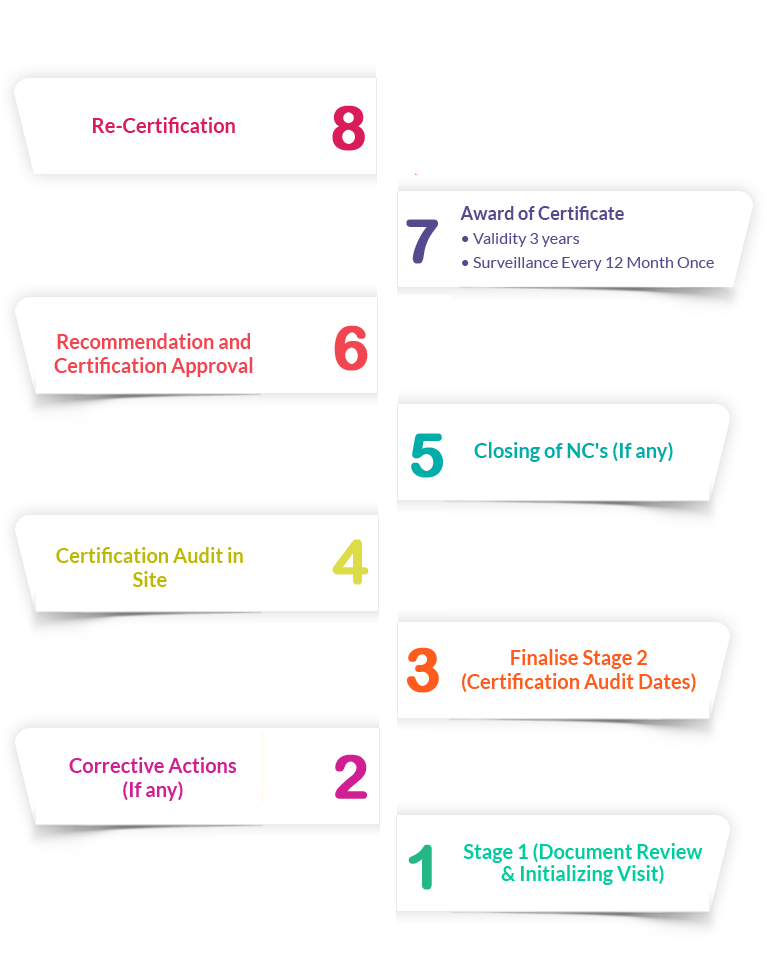
Certification Process
-
01
Preliminary Audit (Optional)
An initial review can identify gaps in food safety practices and help prepare your Food Safety Management System for certification.
-
02
Certification Audit
Stage 1 and Stage 2 audits assess readiness, documentation, hazard analysis, prerequisite programmes, control measures, and practical implementation against applicable requirements.
-
03
Certification Decision
Following satisfactory audit outcomes and the required certification decision, a certificate may be issued for the approved scope.
-
04
Surveillance Audits
Periodic surveillance confirms that the Food Safety Management System continues to meet applicable requirements and remains effectively implemented.
-
05
Recertification
Recertification is completed before expiry in accordance with the applicable certification scheme.