ISO 41001:2018 is an international standard for Facility Management Systems (FMS). It provides a framework for organizations to manage facilities effectively, improve service delivery, optimize resources and create safe, efficient and productive working environments.
The standard helps organizations align facility management activities with their business objectives, user requirements and operational needs. It applies to organizations that manage facilities directly as well as those providing facility management services to clients.
What is ISO 41001:2018?
ISO 41001:2018 specifies requirements for establishing, implementing, maintaining and improving a facility management system. It helps organizations integrate people, places and processes within the built environment to improve the quality and effectiveness of facility management services.
The standard encourages a structured approach to facility planning, operational control, resource management, performance measurement and continual improvement. It supports better coordination between facility management teams, service providers, building users and organizational leadership.
Why is ISO 41001 important?
Facility management involves a wide range of activities, including building maintenance, cleaning, security, workplace support, utilities and space management. ISO 41001 helps organizations establish consistent processes, define responsibilities, monitor service performance and manage operational risks more effectively.
Key Elements of ISO 41001:2018
ISO 41001 emphasizes effective facility management, service quality, resource efficiency and alignment with organizational objectives.
Facility Management
User Satisfaction
Operational Control
Risk Management
Performance Evaluation
Resource Efficiency
Continual Improvement
Who is ISO 41001:2018 for?
ISO 41001 is suitable for organizations involved in facility management, regardless of their size, type or location. It can support organizations that manage their own facilities and service providers responsible for delivering facility management activities to other organizations.
Organizations that may benefit
- Facility management service providers.
- Commercial office buildings and business parks.
- Hospitals and healthcare facilities.
- Schools, colleges and universities.
- Shopping malls and retail complexes.
- Industrial plants and manufacturing facilities.
- Hotels, hospitality businesses and residential complexes.
- Government buildings and public infrastructure facilities.

How will it benefit my business?
- Improve the consistency and quality of facility management services.
- Align facility operations with organizational goals.
- Optimize the use of facilities, equipment and resources.
- Improve maintenance planning and operational coordination.
- Strengthen risk identification and operational controls.
- Enhance the experience of building occupants and facility users.
- Improve supplier coordination and service provider performance.
- Support performance monitoring and continual improvement.
ISO 41001:2018: Benefits
Implementing ISO 41001 can help organizations establish a coordinated approach to managing buildings, workplaces, equipment and support services. Clear procedures and defined responsibilities can improve service reliability, resource allocation and communication between facility management teams and other departments.
The standard also encourages organizations to evaluate facility management performance against defined objectives. This can help identify service gaps, improve operational efficiency and support informed decisions about maintenance, outsourcing and facility-related investments.
Should my organization be certified?
ISO 41001 certification may be suitable for organizations that want to demonstrate a systematic approach to facility management and improve confidence among clients, occupants and other stakeholders. Before pursuing certification, assess your facility management scope, client requirements, operational priorities and applicable legal obligations.
How do I get started with ISO 41001:2018?
Implementation begins by reviewing current facility management activities, stakeholder expectations, operational risks and organizational objectives.
Key implementation tips
- Define the scope of the facility management system.
- Identify the needs of building users, clients and stakeholders.
- Review existing maintenance and facility management processes.
- Establish facility management objectives and performance indicators.
- Define roles, responsibilities and resource requirements.
- Develop procedures for service delivery, maintenance and operational control.
- Monitor supplier performance and evaluate service outcomes.
- Conduct internal audits, management reviews and corrective actions.
The implementation plan should reflect the organization's facilities, service scope, operational complexity and contractual requirements.
Related Standards
The following standards may complement a facility management system, depending on the organization's activities and objectives:
- ISO 9001 – Quality management systems.
- ISO 14001 – Environmental management systems.
- ISO 45001 – Occupational health and safety management systems.
- ISO 50001 – Energy management systems.
- ISO/IEC 27001 – Information security management systems.
These standards address different management system requirements and may be integrated where appropriate.
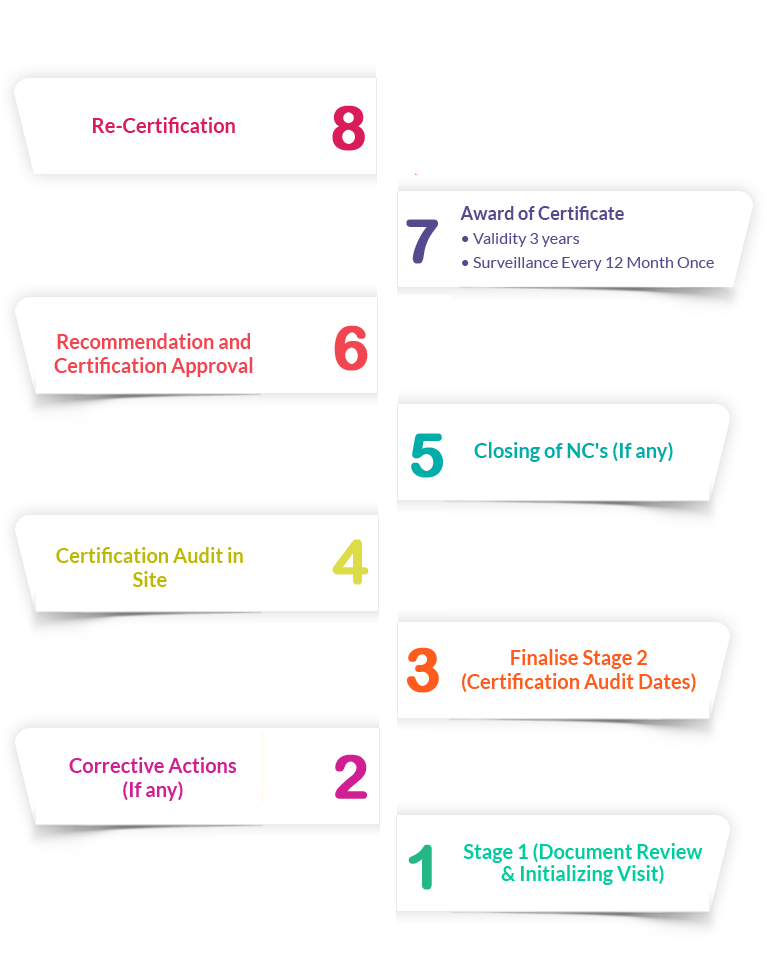
Certification Process
-
01
Preliminary Audit (Optional)
Review existing facility management practices, identify gaps and assess readiness against the applicable ISO 41001 requirements.
-
02
Certification Audit (Stage 1/2)
The certification body reviews documented information and evaluates the implementation and effectiveness of the facility management system.
-
03
Certification Decision
Audit findings and corrective actions are reviewed before the certification body makes its certification decision.
-
04
Surveillance Audits
Periodic surveillance audits assess continued conformity and the ongoing effectiveness of facility management processes.
-
05
Recertification
Recertification evaluates the continuing suitability and effectiveness of the management system before the certificate's validity period ends.