ISO/IEC 42001:2023 is an international standard for Artificial Intelligence Management Systems (AIMS). It provides a structured framework for organizations that develop, provide or use AI systems to manage AI-related risks, establish responsible practices and improve governance throughout the AI lifecycle.
The standard addresses the organizational and operational aspects of artificial intelligence, including accountability, transparency, risk assessment, data governance and continual improvement. It helps organizations establish controls appropriate to their AI applications, business objectives and applicable requirements.
What is ISO/IEC 42001:2023?
ISO/IEC 42001:2023 specifies requirements for establishing, implementing, maintaining and continually improving an Artificial Intelligence Management System. It is designed for organizations that develop, provide or use AI-based products and services, regardless of their size or industry.
The standard provides a management system approach to identifying AI-related impacts, evaluating risks and opportunities, assigning responsibilities and implementing appropriate controls. It encourages organizations to consider the entire AI lifecycle, from planning and development through deployment, monitoring and improvement.
Why is ISO/IEC 42001 important?
AI systems can introduce challenges related to privacy, security, bias, reliability, transparency and accountability. ISO/IEC 42001 helps organizations manage these challenges through defined governance processes, risk assessments, documented responsibilities and ongoing performance evaluation.
Key Elements of ISO/IEC 42001:2023
ISO/IEC 42001 emphasizes responsible AI governance, risk-based decision-making and effective oversight throughout the AI lifecycle.
AI Governance
Risk Management
Responsible AI
Transparency
Accountability
Data Governance
Continual Improvement
Who is ISO/IEC 42001:2023 for?
ISO/IEC 42001 is intended for organizations that develop, supply, integrate or use artificial intelligence systems as part of their products, services or internal operations. It can be applied across industries and adapted to the organization's AI-related responsibilities and risks.
Organizations that may benefit
- Artificial intelligence and machine learning companies.
- Software development and IT service providers.
- Organizations developing generative AI applications.
- Cloud computing and AI platform providers.
- Financial institutions using AI for decision support.
- Healthcare organizations deploying AI-based solutions.
- Manufacturers using AI for automation and predictive maintenance.
- Organizations integrating third-party AI systems into their operations.

How will it benefit my business?
- Establish a structured approach to AI governance.
- Identify and manage AI-related risks and impacts.
- Improve accountability for AI development and use.
- Strengthen oversight of AI systems throughout their lifecycle.
- Support transparency and appropriate human oversight.
- Improve the management of AI data and documentation.
- Build stakeholder confidence in AI-related processes.
- Support continual improvement of AI management practices.
ISO/IEC 42001:2023: Benefits
Implementing ISO/IEC 42001 can help organizations establish clear responsibilities, consistent governance procedures and documented controls for their AI-related activities. A structured management system can make it easier to evaluate risks, monitor AI performance and respond to identified issues.
The standard also encourages organizations to consider the potential effects of AI systems on individuals, groups and society. By incorporating appropriate assessments, oversight and improvement processes, organizations can strengthen their approach to responsible AI while supporting innovation and business objectives.
Should my organization be certified?
ISO/IEC 42001 certification may be suitable for organizations seeking independent assessment of their AI management system. It can help demonstrate that AI governance is addressed through a structured management framework. Certification does not guarantee that every AI system is safe, unbiased or error-free; organizations must continue to assess and manage risks appropriate to their applications.
How do I get started with ISO/IEC 42001:2023?
Implementation begins by identifying how the organization develops, provides or uses AI and understanding the risks, obligations and expectations associated with those activities.
Key implementation tips
- Define the scope of the AI management system.
- Identify AI applications, stakeholders and relevant requirements.
- Establish an AI policy and assign management responsibilities.
- Assess AI-related risks, impacts and opportunities.
- Determine appropriate controls and document their implementation.
- Establish processes for AI lifecycle management and human oversight.
- Monitor AI system performance and review incidents or concerns.
- Conduct internal audits, management reviews and corrective actions.
The implementation plan should reflect the organization's AI use cases, risk profile, operational complexity and applicable legal and contractual obligations.
Related Standards
The following standards can complement an AI management system, depending on the organization's technology environment and risk management needs:
- ISO 9001 – Quality management systems.
- ISO/IEC 27001 – Information security management systems.
- ISO/IEC 27701 – Privacy information management systems.
- ISO 31000 – Risk management guidelines.
- ISO/IEC 23894 – Guidance on AI risk management.
These standards address different management and technical concerns. Their suitability and current editions should be assessed against the organization's requirements.
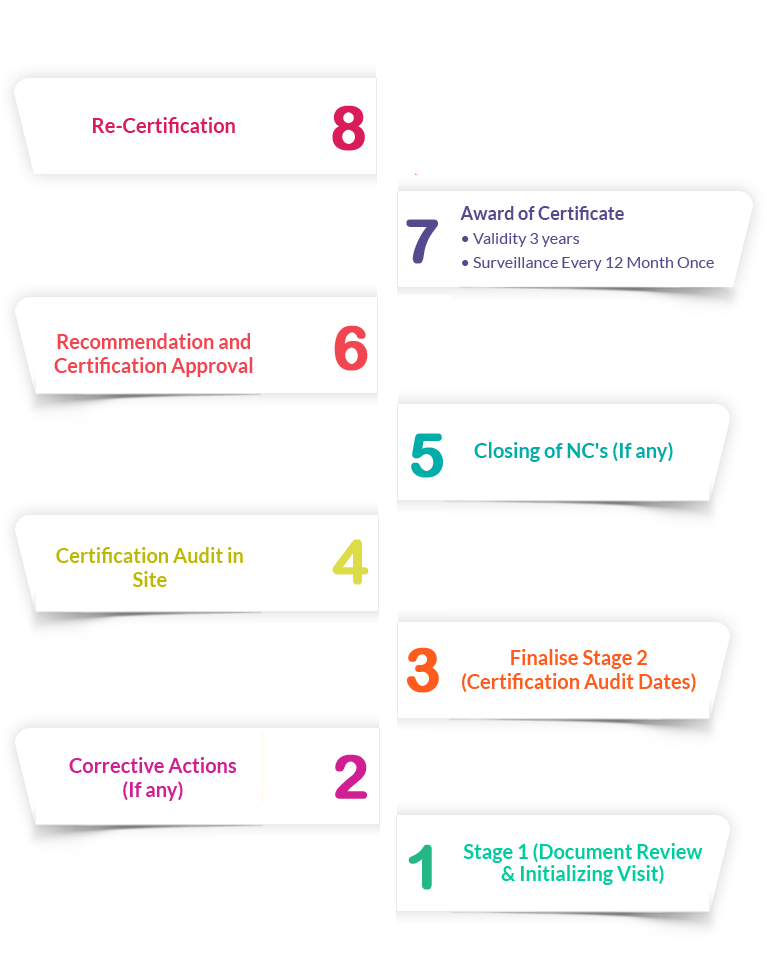
Certification Process
-
01
Preliminary Audit (Optional)
Review existing AI governance practices, identify gaps and assess readiness against the applicable ISO/IEC 42001 requirements.
-
02
Certification Audit (Stage 1/2)
The certification body reviews documented information and evaluates the implementation and effectiveness of the AI management system.
-
03
Certification Decision
Audit findings and corrective actions are reviewed before the certification body makes its certification decision.
-
04
Surveillance Audits
Periodic surveillance audits assess continued conformity and the ongoing effectiveness of AI governance and management processes.
-
05
Recertification
Recertification evaluates the continuing suitability and effectiveness of the AI management system before the certificate's validity period ends.