The ISO 9000 series family of standards addresses various structures of quality management and contains some of the industries well acknowledged standards. The standards provide guidance and tools for all sectors in any industry from production to supply or service. Ensuring that their products and services consistently meet customer's requirements and that quality is consistently improved.
What is ISO 9001?
ISO 9001 is an international standard that specifies requirements for a quality management system. It helps businesses and organisations improve efficiency, profitability and customer satisfaction through consistent processes and continual improvement.
What is a quality management system?
A quality management system is an organisation-wide approach to managing processes so that customer requirements, business risks and stakeholder expectations are understood and addressed.
ISO 9001 encourages organisations to define processes, establish measurable objectives, evaluate performance and continually improve the way they deliver products and services.
Seven Quality Management Principles
These principles provide a foundation for improving organisational performance and customer satisfaction.
Customer Focus
Leadership
Engagement of People
Process Approach
Improvement
Evidence-Based Decision Making
Relationship Management
Who is ISO 9001 for?
ISO 9001 is designed for organisations of all types, sizes and sectors. Smaller companies without dedicated quality teams can also benefit from structured processes, clear responsibilities and consistent customer service.

How will it benefit my business?
- Improve organisational performance and process consistency.
- Identify business risks and opportunities.
- Improve customer satisfaction and customer relationships.
- Reduce waste, errors and unnecessary operating costs.
- Support continual improvement and business development.
ISO 9001: Benefits
Standardised processes help employees understand objectives, responsibilities and customer requirements. A quality management system can improve productivity, reduce operational costs and support compliance with applicable statutory and regulatory requirements.
ISO certification can help organisations demonstrate that their management system has been assessed against the applicable standard. Its value depends on the organisation's needs, certification scope and the recognition of the certification body.
Should I be certified to ISO 9001?
Certification can provide customers and stakeholders with evidence of an independently assessed quality management system. Some customers, tenders or supply chains may require certification.
How do I get started with ISO 9001:2015?
Key implementation tips
- Define your objectives and reasons for implementation.
- Secure senior management support and assign responsibilities.
- Identify key processes and understand customer requirements.
- Evaluate risks and document the necessary processes.
- Monitor performance and continually improve the system.
Need further guidance? Contact our team to discuss your implementation and certification requirements.
Sector-Specific Applications
Related standards and guidance include:
- ISO 29001 — Petroleum, petrochemical and natural gas industries.
- ISO 13485 — Medical devices quality management.
- ISO/IEC 90003 — Software engineering guidance.
- ISO 18091 — Quality management for local government.
- ISO 21001 — Educational organisations management systems.
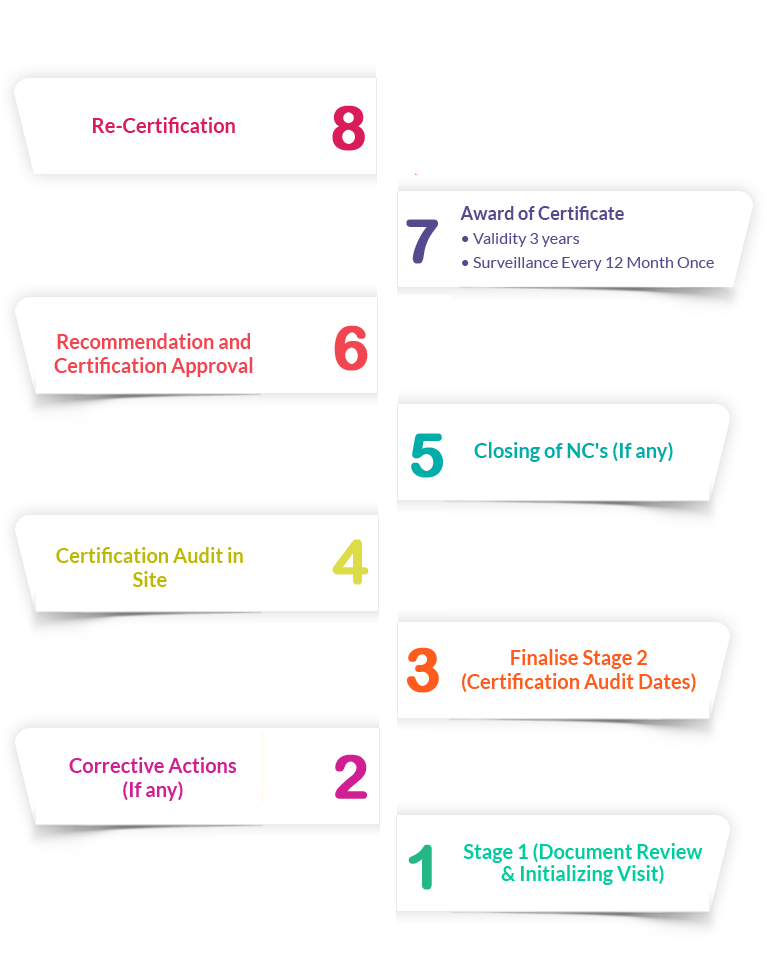
Certification Process
-
01
Preliminary Audit (Optional)
An initial review can identify gaps and help prepare your quality management system for certification.
-
02
Certification Audit
Stage 1 and Stage 2 audits assess readiness, documentation and practical implementation against applicable requirements.
-
03
Certification Decision
Following satisfactory audit outcomes and the required certification decision, a certificate may be issued for the approved scope.
-
04
Surveillance Audits
Periodic surveillance confirms that the management system continues to meet applicable requirements.
-
05
Recertification
Recertification is completed before expiry in accordance with the applicable certification scheme.